DeWalt DCF921 vs DCF923: 1/2 or 3/8 ATOMIC? (October 2026)
Choose the DCF921 for 1/2 in sockets or the DCF923 for 3/8 in sockets. Both are compact ATOMIC impact wrenches with up to 300 ft-lb of fastening torque and 4 speed settings.
On this page (8 sections)
- DeWalt DCF921 vs DCF923: what changes?
- Which drive size suits your sockets?
- Do their torque and control features differ?
- Is a hog ring anvil right for you?
- What about the DCF922?
- Are either wrench suited to wood screws?
- What comes in the box, and what else do you need?
- DeWalt DCF923 vs DCF921: which should you choose?
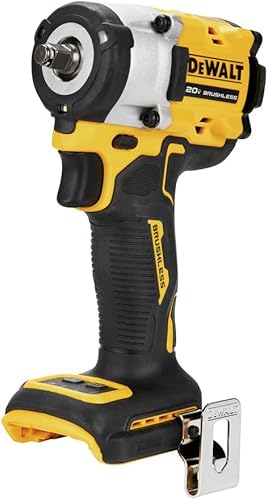
Choose the DCF921 for 1/2 in sockets or the DCF923 for 3/8 in sockets. In the DeWalt DCF921 vs DCF923 comparison, drive size is the main difference: their stated fastening torque and control features are similar.
Both are compact ATOMIC 20V MAX impact wrenches. Each offers up to 300 ft-lb of fastening torque, 4 speed settings, Precision Wrench control, an onboard LED with brightness control and a hog ring anvil.

DeWalt DCF921 vs DCF923: what changes?
The DCF921 has a 1/2 in drive, and the DCF923 has a 3/8 in drive. Match the wrench to the sockets you use most often so you can work without changing drive sizes.
Both use hog ring anvils for rapid, secure socket changes. Both also include Timber Screw mode, which is described as optimizing speed in wood.
Their listed maximum fastening torque is the same: up to 300 ft-lb. Product descriptions also give both up to 450 ft-lb of breakaway torque, so those figures don't make one a clear choice over the other.
| Feature | DCF921 | DCF923 |
|---|---|---|
| Drive and anvil | 1/2 in hog ring | 3/8 in hog ring |
| Maximum fastening torque | Up to 300 ft-lb | Up to 300 ft-lb |
| Maximum breakaway torque | Up to 450 ft-lb | Up to 450 ft-lb |
| Speed settings | 4 | 4 |
| Precision Wrench control | Yes | Yes |
| LED brightness control | Yes | Yes |
| Timber Screw mode | Yes | Yes |
For a wider look at wrench types and sizing, see our impact wrench torque and size guide. It can help you put drive size in context with the work you plan to do.
Which drive size suits your sockets?
Pick the DCF921 if most of your impact sockets are 1/2 in drive; pick the DCF923 if they're 3/8 in drive. The wrench's anvil size sets the connection point for your sockets.
A 1/2 in drive can suit a garage kit built around larger sockets. The DCF921 is the direct match for that setup, and its hog ring supports quick socket changes.
A 3/8 in drive is a fit for a kit organized around 3/8 in sockets. The DCF923 keeps the same stated torque and controls while matching those sockets directly.
Should lug nuts decide between them?
Start with the socket drive and the vehicle's needs, then use a torque wrench for final tightening. An impact wrench removes or runs down fasteners; it shouldn't replace the vehicle maker's torque procedure.
If your lug nut sockets are 1/2 in drive, the DCF921 is the direct fit. If they are 3/8 in drive, the DCF923 matches, but make sure your socket and wrench are appropriate for the vehicle and task.
Our guide to impact wrench size for lug nuts explains why the fastener alone doesn't determine the right tool. Follow the vehicle manual for final torque and tightening order.
What if your socket set has both sizes?
Choose the drive size you reach for most often. An adapter can bridge drive sizes in some setups, but it adds another connection and shouldn't be assumed suitable for every task.
If your regular work is split evenly, compare the sockets you need to reach in tight spaces and the ones used on larger fasteners. Then choose the anvil that fits the more demanding or frequent part of your work.
Do their torque and control features differ?
The DCF921 and DCF923 share the stated torque and control features. Neither has a published advantage here based on the figures and features available for these models.
Both offer up to 300 ft-lb of fastening torque and up to 450 ft-lb of breakaway torque. These are maximum figures, not a promise that every fastener will loosen or tighten at those values.
Both have 4 speed settings and Precision Wrench control, which is intended to help prevent overtightening and fastener run-off. Use care near delicate parts and stop to verify tightness with the proper tool.
The onboard LED has brightness control on both. That can help illuminate a dim work area, though a work light doesn't replace safe lighting or a clear view of the fastener.
For more on choosing settings and avoiding excess force, read whether impact wrenches have torque settings. The setting names and control behavior can vary by model, so check the manual for the wrench you buy.
Is a hog ring anvil right for you?
A hog ring anvil suits you if you want to change sockets quickly and keep them secured during use. That feature is shared by the DCF921 and DCF923.
The ring is the same type of retention system on both models. The choice is still 1/2 in or 3/8 in drive, depending on your sockets.
If you work with a socket held at a raised or angled position, consider the DCF922 instead. Its detent pin anvil is specifically described as holding socket bits in those positions.
What about the DCF922?
The DCF922 is the 1/2 in alternative with a detent pin anvil. It shares the up to 300 ft-lb fastening torque and 4 speed settings, but its socket retention differs from the DCF921's hog ring.
Choose the DCF922 when the detent pin's socket hold suits your work. Choose the DCF921 if you want a 1/2 in hog ring anvil for rapid socket changes.
The DCF922 also has Precision Wrench control and an onboard LED with brightness control. It is a tool-only option, so make sure your battery setup is ready.
For a closer look at the 1/2 in hog ring option, read our DeWalt DCF921 review. If you're comparing DeWalt across torque classes, see the DCF891 vs DCF900 comparison.
Are either wrench suited to wood screws?
Both include Timber Screw mode, which is described as optimizing speed in wood. That shared mode doesn't change the drive-size choice for socket work.
The DCF921 and DCF923 are impact wrenches, and the model descriptions include the mode as an added feature. Use the correct fastener and follow its maker's guidance for the material and application.
If your work centers on driving screws rather than turning sockets, compare an impact wrench with an impact driver before choosing. The impact wrench vs impact driver guide explains the different tool roles.
What comes in the box, and what else do you need?
Both are tool-only models, and each package includes a belt clip. The DCF921 and DCF923 descriptions say the battery isn't included.
Plan for a compatible 20V MAX battery and charger if you don't already have them. Check the exact kit contents before ordering, since tool-only and kit versions can differ.
The DCF921 weighs 2.8 pounds and measures 9.2 inches long. The DCF923 is also listed at 2.8 pounds and 9.2 inches long, so those figures don't separate the two.
DeWalt DCF923 vs DCF921: which should you choose?
Choose the DCF921 for 1/2 in sockets and the DCF923 for 3/8 in sockets. Their stated torque, control features, length and weight are alike, so your socket setup should lead the decision.
Pick the DCF922 if a 1/2 in detent pin better fits your socket-retention needs. For a broader look at 3/8 in options, browse our best 3/8 drive cordless impact wrenches.
The short rule for the DeWalt DCF921 vs DCF923 is simple: match the anvil to your sockets, then use the manual and a torque wrench for critical tightening.
Frequently asked questions
What is the difference between the DeWalt DCF921 and DCF923?
The DCF921 has a 1/2 in hog ring anvil, while the DCF923 has a 3/8 in hog ring anvil. Both are ATOMIC 20V MAX cordless impact wrenches with up to 300 ft-lb of fastening torque, 4 speed settings and Precision Wrench control.
Choose based on the drive size of your sockets.
Does the DCF921 have more torque than the DCF923?
The available product details give both models up to 300 ft-lb of maximum fastening torque and up to 450 ft-lb of breakaway torque. Those figures don't distinguish the two for torque, so drive size and socket compatibility are more useful decision points.
Can I use 1/2 in sockets on the DCF923?
The DCF923 has a 3/8 in hog ring anvil, so 1/2 in drive sockets won't attach directly. A suitable adapter may connect different drive sizes, but check that the adapter and socket are made for your wrench and task.
What is the difference between the DCF921 and DCF922?
Both are 1/2 in ATOMIC impact wrenches with up to 300 ft-lb of fastening torque and 4 speed settings. The DCF921 uses a hog ring anvil for quick socket changes; the DCF922 uses a detent pin anvil that holds sockets in raised and angled positions.
Do the DCF921 and DCF923 include a battery?
No. Both versions described here are tool only, and the DCF921 package includes the wrench and a belt clip.
Check that you have a compatible 20V MAX battery and charger before planning a job.


