Impact Wrench vs Impact Driver: Which Fits Your Jobs? (October 2026)
Choose an impact wrench for nuts and bolts with sockets, and an impact driver for screws with hex bits. Your fasteners, access needs and existing battery platform decide which tool fits.
On this page (8 sections)
- Impact wrench vs impact driver: what is the main difference?
- Which tool should you use for your jobs?
- How do their drives and attachments compare?
- Which tool is easier to control?
- Does size matter in tight spaces?
- Can an impact driver replace an impact wrench?
- Which impact wrench fits these jobs?
- Which should you buy: an impact wrench or an impact driver?
Choose an impact wrench for nuts and bolts with sockets, and an impact driver for screws with hex bits. In an impact wrench vs impact driver choice, start with the fastener and the attachment it needs.
The tools use impact force to help turn fasteners, but their drives differ. An impact wrench has a square drive for sockets; an impact driver typically has a 1/4 in hex collet for driver bits.
If you work on wheels or automotive bolts, a wrench is the more direct fit. For deck screws, cabinet hardware and other screw work, an impact driver is built around the bit you need.
 Best for tight socket access
Milwaukee 2854-20 M18 FUEL 3/8 Inch Compact Impact Wrench
Impact wrench vs impact driver: what is the main difference?
An impact wrench is designed for socket work, while an impact driver is designed for bit-driven fasteners. That difference affects the jobs each tool handles well and how you control the fastener.
A square-drive wrench takes sockets sized for nuts and bolt heads. Common wrench drives include 3/8 in and 1/2 in, with the right size depending on the fastener and available space.
An impact driver holds hex-shank bits, such as Phillips, Torx and square-drive bits. It is a natural choice when a fastener has a screw head rather than a nut.
The tools aren't interchangeable just because both deliver rotational impacts. An adapter can bridge different attachments in some cases, but it doesn't change the tool's size, control or intended task.
Which tool should you use for your jobs?
Choose by the fasteners you handle most often: use a wrench for nuts and bolts, and a driver for screws. If both kinds of work are routine, owning both can save time and make the right attachment easier to use.
Choose an impact wrench for sockets
An impact wrench makes sense for lug nuts, bolts and other fasteners that take sockets. It can also help where a hand ratchet would be slow, provided the wrench and socket fit the job.
For car wheels, first check the vehicle owner's manual for the correct tightening torque. An impact wrench can remove or run down fasteners, but use a torque wrench for final tightening to the stated specification.
Our guide to what size impact wrench lug nuts call for explains how drive size and access affect that choice. For a broader look at wrench tasks, see what an impact wrench is good for around the house.
Choose an impact driver for screws
An impact driver is the practical choice for driving many screws with hex bits. It is easier to set up for different screw heads, and the bit can go straight into the tool's collet.
That setup suits jobs like assembling furniture, building a fence or fastening boards. Match the bit to the screw head and use a lower speed or lighter trigger pressure when the material can split.
You can sometimes use a driver with a socket adapter, but reserve that approach for suitable fasteners and loads. For wheel nuts or stubborn bolts, a wrench with the correct socket is a better tool match.
How do their drives and attachments compare?
The wrench’s square drive takes sockets; the driver’s hex collet takes driver bits. The attachment determines how easily the tool meets the fastener.
A 1/2 in square drive is common for larger automotive sockets, while a 3/8 in drive can be useful where a smaller socket setup fits better. Choose the socket and drive for the fastener, not just the tool's advertised torque.
An impact driver's 1/4 in hex collet makes bit changes quick. Many standard driver bits have a hex shank, so you can switch between screw types without changing tools.
Impact-rated sockets and bits are designed for impact tools. Don't use a regular chrome socket with an impact wrench, since it may not be made for repeated impact loads.
Which tool is easier to control?
An impact driver usually offers a more natural setup for screw control, while some impact wrenches add modes for socket fastening. Either tool can damage a fastener or work surface if you apply too much force.
The Milwaukee 2854-20 wrench has 4-mode DRIVE CONTROL, including an auto shut-off mode that applies no more than 20 ft-lb for hand-tight fastening applications. That feature is useful for controlled wrench work, though final torque still depends on the job and the maker's instructions.
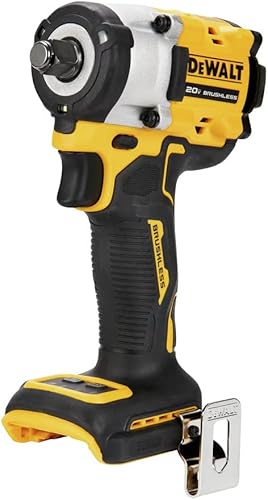
The DeWalt DCF921B has 4 speed settings and Precision Wrench control, which is intended to help prevent overtightening and fastener run-off. These controls can help manage a task, but don't replace a torque wrench where a specified final torque matters.
For an impact driver, start slowly and keep the bit aligned with the screw. Stop when the head is seated; continued driving can strip the screw or damage the material.
Our guide to impact wrench torque settings explains what tool modes can and can't do. For final wheel torque, read how to check torque after an impact wrench job.
Does size matter in tight spaces?
A compact wrench can help when a socket needs to reach a fastener in a confined area. An impact driver may still fit better for screw work because its bit setup is smaller.
The Milwaukee 2854-20 is 4.8 in long, with a 3/8 in square drive. Its short body and tri-LED lighting can help when you need socket access near surrounding parts.
The DeWalt DCF901B is also described as compact for hard-to-reach automotive spaces. It has a 1/2 in drive, which may be more useful when the job calls for larger sockets.
A compact tool still needs room for the socket and your hand. Check the clearance around the fastener before choosing based on tool length alone.
Can an impact driver replace an impact wrench?
An impact driver can handle some smaller socket tasks with an adapter, but it doesn't replace a wrench for regular automotive socket work. The attachment, tool output and control all matter.
Adapters add length, which can reduce access in a cramped space. They also put another connection between the tool and socket, so use an impact-rated adapter and stay within its intended use.
If you regularly remove wheel nuts, suspension bolts or other larger fasteners, choose an impact wrench with the drive size and capability that suits those tasks. Our mid-torque vs high-torque impact wrench comparison can help narrow wrench power for automotive work.
Which impact wrench fits these jobs?
Pick a 1/2 in wrench for common larger socket work, or a compact 3/8 in wrench when access is the priority. These examples are impact wrenches, so they suit socket fasteners rather than replacing an impact driver for screw work.
The DeWalt DCF921B combines a 1/2 in drive with Precision Wrench control. Its battery is not included, so check compatibility with your existing DeWalt 20V MAX tools.
The Milwaukee 2854-20 is a compact option for tight spaces, with tri-LEDs around the anvil. It is a bare tool, with no battery or charger included.
The DeWalt DCF901B offers up to 250 ft-lb of tightening torque and 400 ft-lb of breakaway torque. Its battery is not included, so confirm that its 12V MAX platform fits your tools.
Which should you buy: an impact wrench or an impact driver?
Buy an impact wrench if your regular jobs need sockets; buy an impact driver if they need hex bits. Choose based on the fastener you meet most, then check drive size, clearance and battery compatibility.
For occasional vehicle work, start with the socket size and access needed for your fasteners. Our impact wrench vs breaker bar guide compares powered removal with a manual tool, and torque know-how covers torque, size and wheel guidance.
If you mostly build or repair things with screws, an impact driver is the better fit. If both jobs come up often, keep both tools available and use each with the attachment it was designed for.
Sources
FAQ
Can an impact driver remove lug nuts?
A typical impact driver uses a 1/4 in hex collet for driver bits, while lug nuts need a socket drive and a suitable impact wrench. An adapter may connect a socket to a driver, but it doesn't make the tools equivalent.
Use the right tool and follow the vehicle maker's torque instructions when reinstalling wheels.
Can an impact wrench drive screws?
Some impact wrenches can drive screws with an appropriate adapter, but their socket drive and high output make them less suited to routine screw work. An impact driver accepts hex bits directly and is easier to control for common fastening tasks.
Use a wrench for nuts and bolts, and a driver for screws.
Which tool is better for working on a car?
An impact wrench is usually the better fit for wheel nuts and other larger threaded fasteners because it works with sockets. An impact driver suits screws and smaller fasteners that take hex bits.
For wheel installation, use a torque wrench to tighten to the vehicle maker's specification.
Do impact wrenches and impact drivers use the same batteries?
They can share a battery platform when the tools are from the same compatible product line, but the tools do different jobs. Check the exact battery system and voltage before buying.
These 3 wrench options are tool-only, so you need a compatible battery and, where needed, a charger.
Frequently asked questions
Can an impact driver remove lug nuts?
A typical impact driver uses a 1/4 in hex collet for driver bits, while lug nuts need a socket drive and a suitable impact wrench. An adapter may connect a socket to a driver, but it doesn't make the tools equivalent.
Use the right tool and follow the vehicle maker's torque instructions when reinstalling wheels.
Can an impact wrench drive screws?
Some impact wrenches can drive screws with an appropriate adapter, but their socket drive and high output make them less suited to routine screw work. An impact driver accepts hex bits directly and is easier to control for common fastening tasks.
Use a wrench for nuts and bolts, and a driver for screws.
Which tool is better for working on a car?
An impact wrench is usually the better fit for wheel nuts and other larger threaded fasteners because it works with sockets. An impact driver suits screws and smaller fasteners that take hex bits.
For wheel installation, use a torque wrench to tighten to the vehicle maker's specification.
Do impact wrenches and impact drivers use the same batteries?
They can share a battery platform when the tools are from the same compatible product line, but the tools do different jobs. Check the exact battery system and voltage before buying.
These 3 wrench options are tool-only, so you need a compatible battery and, where needed, a charger.


