How to Choose an Impact Wrench
To choose an impact wrench, match its drive size, torque, and power source to your most demanding regular job. For car and yard work, also check control settings, tool length, weight, and whether the battery is included.
On this page (8 sections)
- What size impact wrench should you buy?
- How much torque do you need?
- Which impact wrench fits car and yard jobs?
- Should you choose cordless or air power?
- Which control and size features matter?
- How do you choose an impact wrench for mower blades?
- What should you check before buying?
- How to choose an impact wrench for your work
To choose an impact wrench, match drive size, torque, and power source to your hardest regular job. For car and yard work, check the tool's control settings, length, weight, and battery needs before you buy.
Start with the fasteners you expect to handle, such as wheel lugs, mower blade bolts, or smaller hardware in tight spaces. Then compare maker torque figures and the tool's fit around the work.
Our torque know-how guide connects sizing, torque, and common impact wrench jobs.
What size impact wrench should you buy?
Choose a drive size that fits the sockets and fasteners you use most. A 3/8 inch drive favors access and smaller fasteners, while a 1/2 inch drive is a common choice for car wheel work.
Drive size alone doesn't tell you how much force a tool delivers. Check torque figures and make sure you can get the right impact-rated socket in the size you need.
A short tool can help where a wheel well or engine bay leaves little room. For example, the Milwaukee 2854-20 is 4.8 inches long, with a 3/8 inch drive and maker-claimed nut-busting torque of up to 250 ft-lb.
For wheel lugs, look at the socket size, clearance, and torque needs together. Our guide to choosing an impact wrench size for lug nuts covers that decision.
How much torque do you need?
Pick a wrench with enough breakaway torque to loosen your toughest expected fastener, then consider fastening torque and control for installation. The figures are not interchangeable: breakaway torque describes loosening, while fastening torque describes driving a fastener.
Maker figures give you a starting point, not a guarantee for every stuck bolt. Corrosion, joint condition, fastener size, and access can affect removal.
For a deeper explanation of sizing, see how much torque you need in an impact wrench.
Don't use an impact wrench as your final torque check on car wheels. Follow the vehicle manual and use a torque wrench to finish tightening.
Which impact wrench fits car and yard jobs?
The right wrench depends on how often you work, how much room you have, and how demanding the fasteners are. A compact model may suit occasional car and yard tasks, while high torque can be useful for larger or stubborn fasteners.
Is a compact 3/8 inch wrench enough?
A compact 3/8 inch wrench can make sense for smaller fasteners, light vehicle work, and tight access. Milwaukee's 2854-20 has four DRIVE CONTROL modes, Tri-LED lighting, and an auto shut-off mode that applies no more than 20 ft-lb for hand-tight applications.
Those controls can help when you want to manage the tool's speed and avoid relying on full power for every task. The tool is sold without a battery or charger, so factor in a compatible M18 battery if you don't already have one.
When should you choose a 1/2 inch wrench?
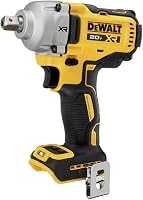
Choose a 1/2 inch wrench if your jobs call for larger sockets or more torque than a compact 3/8 inch model provides. The DeWalt DCF921B is a 1/2 inch option with four speed settings, Precision Wrench control, and maker-claimed torque of up to 300 ft-lb fastening and 450 ft-lb breakaway.
It is a tool-only model, so check battery compatibility before buying. If you're comparing compact, mid-torque, and high-torque choices, start with what a mid-torque impact wrench is.
When is high torque worth the extra tool?
High torque is worth considering if your work includes stubborn wheel lugs, larger equipment, or other demanding fasteners. The DeWalt DCF900B is a 1/2 inch high-torque wrench with maker-claimed figures of 1,030 ft-lb maximum fastening torque and 1,400 ft-lb maximum breakaway torque.
At 6.4 lb, this tool weighs more than the compact options here. It also requires a separate battery and charger, so weigh its capability against the tasks you actually do.
Should you choose cordless or air power?
Choose cordless for mobility around a car, driveway, or yard, especially if you already own batteries from a compatible tool platform. Air tools can suit a stationary garage with a compressor that meets the wrench's requirements.
For cordless models, check whether the battery and charger come with the tool. The Milwaukee 2854-20 and DeWalt DCF921B are tool-only, and the DCF900B also requires a separately sold battery and charger.
The Craftsman V20 RP kit includes a battery, charger, and soft bag. Its maker-claimed figures are up to 700 ft-lb fastening torque and 1,000 ft-lb breakaway torque, with three speed settings and a variable-speed trigger.
A kit can cost less to set up if you need both battery and charger, but it may not suit you if you already use another battery platform. Compare the tool and included parts with what you have at home.
Which control and size features matter?
Look for controls that fit the task, not just the largest torque number. Speed settings, a variable-speed trigger, shut-off modes, and a work light can help you manage fastening in different spaces.
A short body can reach around suspension parts or mower decks more easily. Check the stated tool length and weight, then consider where you'll hold it and whether the socket can reach the fastener straight on.
Lighting is useful under a vehicle or behind equipment. The Milwaukee 2854-20 has Tri-LEDs around the anvil; the DeWalt DCF921B and DCF900B have onboard LED lights, with brightness control noted for the DCF900B.
How do you choose an impact wrench for mower blades?
Choose a wrench that fits the blade bolt and mower manual, and make safety steps part of the decision. Disconnect the mower's power source as directed, secure the blade, and use a torque wrench for final tightening.
An impact wrench can speed removal, but more torque does not make a better blade installation. Follow the mower maker's instructions for blade direction, hardware, and tightening torque.
See our guide to using an impact wrench on lawn mower blades for a job-specific checklist.
What should you check before buying?
Check these details before choosing an impact wrench:
- Drive size: Match the wrench to your common impact sockets and fasteners.
- Torque: Compare fastening and breakaway figures to the hardest jobs you expect.
- Power source: Choose cordless mobility or air power with a suitable compressor.
- Battery and charger: Confirm whether they're included and match your tool platform.
- Control: Look for useful speed modes, a variable trigger, or precision control.
- Fit: Consider length, weight, lighting, and access around the fastener.
Avoid buying based on a single maximum torque figure. The wrench still needs to fit the socket, reach the fastener, and offer enough control for the task.
How to choose an impact wrench for your work
For smaller fasteners and cramped access, choose a compact 3/8 inch wrench with useful speed control. For typical car work, compare 1/2 inch models and the torque your fasteners call for; for tougher jobs, consider a high-torque wrench only if you'll use its extra capacity.
If your main question is wheel work, read what size impact wrench lug nuts call for. If you're still comparing torque levels, use our torque guide to narrow down the size before you buy.
Frequently asked questions
What size impact wrench should I buy for car work?
For passenger-car jobs, start by checking the vehicle manual, fastener size, and the clearance around the work. A 3/8 inch drive can suit smaller fasteners and tight spaces, while a 1/2 inch drive offers a common fit for wheel sockets.
Use a torque wrench for final wheel tightening.
How much torque should an impact wrench have?
Choose enough torque for the largest fastener you expect to remove, with a margin for stuck or corroded hardware. Compare the maker's fastening and breakaway figures carefully, since they describe different tasks.
Use a hand torque wrench for final tightening when the vehicle or equipment manual specifies a value.
Can I use an impact wrench on lawn mower blades?
An impact wrench can help remove or install a blade fastener if the mower manual allows it and you use the correct socket. Secure the blade, disconnect the spark plug wire or battery as directed, and tighten to the manual's torque specification with a torque wrench.
Should I buy a cordless or air impact wrench?
Choose cordless if you need to move around a driveway or yard without an air hose and already own a compatible battery platform. Choose air if you have a compressor that can meet the tool's requirements and expect to work near it.
Check the wrench and compressor manuals before buying.