How Much Torque Do I Need in an Impact Wrench?
For most home car work, a mid-torque impact wrench is a practical starting point; choose more power for stubborn or larger fasteners, and check the vehicle manual for final tightening.
On this page (6 sections)
For most home car work, a mid-torque impact wrench is a practical starting point; choose more power for stubborn or larger fasteners, and check the vehicle manual for final tightening. The right amount depends on the fastener, the tool's control settings, and whether you're loosening or tightening.
Don't treat a high torque number as a universal target. A tool's maximum fastening and breakaway figures describe different jobs, and neither replaces the torque value specified for a vehicle or machine.
How much torque do you need in an impact wrench?
For routine passenger-car work, start by comparing mid-torque models and the jobs you expect to do. Move to a higher-torque model if you regularly face larger fasteners or stubborn bolts, and consider a compact wrench when access and control matter more than maximum output.
The tool has to loosen the fastener without being so unwieldy that it is hard to control. A 1/2 in drive is common for wheel work, but drive size alone doesn't tell you how much torque the wrench delivers.
If your main job is removing wheels, see what size impact wrench lug nuts call for. That guide helps match the tool to the vehicle and the access you have around the wheel.
What changes the torque you need?
Fastener size, condition, and the job itself all affect the torque demand. A corroded or stuck fastener may take more effort to loosen than a clean one, while a tight workspace can make a shorter, lighter tool more useful.
Consider how often you'll handle heavy work, too. If you mainly rotate passenger-car tires and handle occasional household repairs, a high-torque tool may add bulk and power you rarely need.
Think about battery platform and control features along with output. A tool with multiple speed settings or an automatic stop can give you more control during fastening, but you still need to follow the equipment maker's torque instructions.
How much torque do you need for car lug nuts?
Choose a wrench that can loosen your vehicle's lug nuts, then tighten them to the vehicle maker's specified torque with a torque wrench. The impact wrench's maximum output is not the correct tightening target.
Lug nut size, wheel type, vehicle weight, and fastener condition can all affect the job. Check the owner's manual for the exact torque value and tightening sequence; don't guess from a general chart or copy a number from a different vehicle.
For additional guidance on the figures manufacturers publish, read how to read an impact wrench torque chart. Use maker figures as a comparison point, not a promise that every fastener will move the same way.
Do fastening and breakaway torque mean the same thing?
No. Fastening torque and breakaway torque describe different actions, so compare each figure only with the same type of figure.
A tool can publish a strong loosening number without that being a safe tightening setting.
For example, DEWALT lists the DCF900P1 at 1,030 ft-lb maximum fastening torque and 1,400 ft-lb maximum breakaway torque. Those are manufacturer figures for different tasks, not a recommended setting for lug nuts.
Makita lists the XWT18Z at 520 ft-lb fastening torque and 740 ft-lb nut-busting torque. Such paired numbers can help you compare tools, but real results also depend on the fastener, socket, battery, and how the tool is used.
Which torque range fits common jobs?
Match the wrench class to the hardest regular job you expect, with some room for fasteners that are difficult to remove. A compact or mid-torque model suits many home garages, while frequent heavy vehicle or equipment work can call for a high-torque tool.
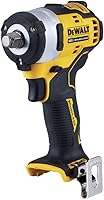
A compact model may be easier to position around suspension parts and tight spaces. The DEWALT DCF921B is rated for up to 300 ft-lb fastening torque and 450 ft-lb breakaway torque, with four speed settings and precision wrench control.
A mid-torque model can be a balanced choice for car work. Milwaukee's 2962-20 includes auto-shutoff control that applies no more than 35 ft-lb for hand-tight fastening applications, plus bolt removal control that reduces speed once a bolt loosens.
The Makita XWT18Z is another mid-torque option, with four speed selections and three forward and three reverse auto-stop modes. Its published torque figures are 520 ft-lb fastening and 740 ft-lb nut-busting.
Choose high torque when your routine includes larger fasteners, work vehicles, or equipment that a mid-torque wrench may struggle to loosen. The DEWALT DCF900P1 offers four modes and precision wrench control, along with its higher published fastening and breakaway figures.
Is a higher torque rating safer or better?
A higher rating is useful only when the job needs it and you can control the tool. Excessive power can overtighten fasteners or cause damage, especially when you hold the trigger too long or use the wrong setting.
Use a lower speed or control mode for initial fastening when your tool offers one. Avoid using an impact wrench as a substitute for a torque wrench on wheels or other safety-critical joints.
If you want to know which features can limit or shape output, see whether impact wrenches have torque settings. Settings can help with control, but they don't turn the tool into a calibrated torque wrench.
How should you choose a torque class?
Choose the lowest class that reliably covers your hardest regular job, with control features suited to the rest of your work. For occasional car and home tasks, compare compact and mid-torque models first; for frequent heavy fasteners, consider high torque.
Before buying, list the fasteners you plan to remove, check their required tightening values, and consider access around the work area. Also check whether a bare tool or kit fits your battery setup.
For more detail on mid-torque tools and who benefits from them, read what a mid-torque impact wrench is. If wheel work is your main concern, use our lug nut impact wrench size guide to narrow the choice.
For most home users asking how much torque they need in an impact wrench, a controllable mid-torque model is a sensible place to start. Choose compact for tight access, or high torque for frequent heavy work, and use a torque wrench for final tightening.
Frequently asked questions
How much torque does an impact wrench need for lug nuts?
For passenger-car lug nuts, a mid-torque wrench is often a useful range to consider, but the right tool depends on the vehicle, fasteners, and their condition. Use the vehicle manual for the specified tightening torque, and finish with a torque wrench rather than relying on the impact wrench.
Is more torque always better in an impact wrench?
No. More torque can help loosen stubborn fasteners, but it can also make it easier to overtighten or damage a fastener.
Choose enough power for your expected jobs, use speed or control modes carefully, and tighten critical fasteners to the maker's specified value with a torque wrench.
What is the difference between fastening torque and breakaway torque?
Fastening torque describes the tool's stated output while tightening, while breakaway torque describes its stated ability to loosen a fastener. They measure different tasks, so don't compare the numbers as if they were interchangeable or assume either figure guarantees a result on your fastener.
Can an impact wrench set lug nuts to the correct torque?
An impact wrench can install lug nuts, but its output can vary with settings, battery condition, fastener condition, and how long you run it. Use it for initial installation only if appropriate, then use a calibrated torque wrench and follow the vehicle manual's tightening pattern and value.